
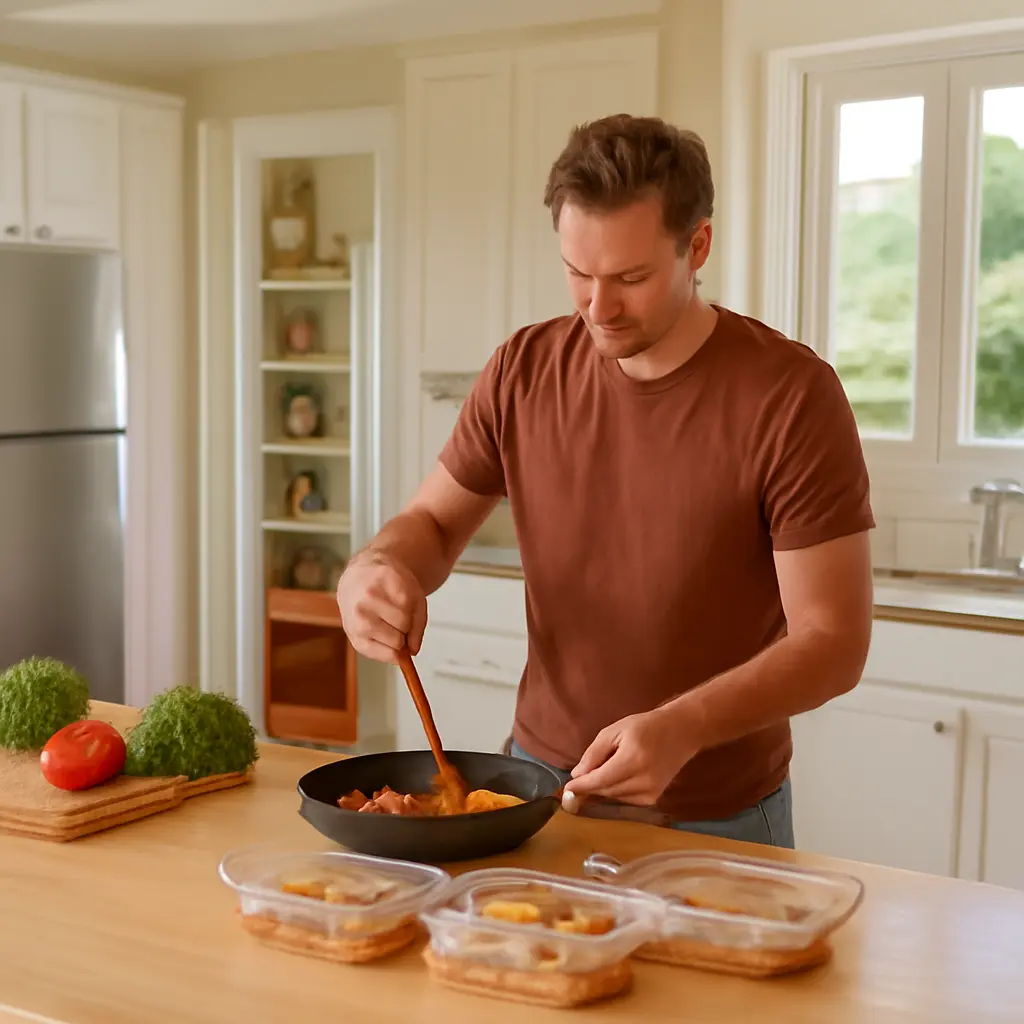
Meal planning for one person means choosing and organizing meals around a single eater’s appetite, schedule, budget, and storage space. The most reliable way to avoid both food waste and menu fatigue is to plan a small number of flexible ingredients, use them in distinct dishes, and freeze or repurpose portions before they spoil. This matters beyond convenience: the U.S. Environmental Protection Agency estimates that food is the most common material sent to U.S. landfills and incinerators, while USDA household food-waste research identifies spoilage and uneaten leftovers as recurring sources of waste. A one-person plan can address both by matching purchases to actual portions, building variety into ingredient reuse, and using storage and safety practices that keep food usable.
Meal planning reduces waste for one-person households
Meal planning is the process of deciding in advance what to eat and what ingredients to buy. For a solo household, the goal is not to cook a separate elaborate recipe every night; it is to make ingredients work across several meals without making those meals feel identical. The USDA’s FoodKeeper guidance supports this approach by offering storage recommendations for keeping foods fresh and safe, while the EPA recommends planning meals, shopping with a list, and freezing food that will not be used in time.
The key distinction is between repeating an ingredient and repeating a meal. A batch of cooked grains, for example, can become a warm bowl, a salad, or a soup addition. That flexibility helps a solo cook buy less, use more of what they buy, and retain choice throughout the week.
Plan meals around portions, not package sizes
A portion-based plan starts with the number of meals a person expects to eat at home, then checks each ingredient against the quantities required. Before shopping, count likely breakfasts, lunches, and dinners, allowing for meals out and schedule changes. The USDA’s MyPlate guidance offers customizable food-group recommendations rather than assuming that every person needs the same quantity, making it useful for adjusting a plan to individual needs.
When a recipe serves four, divide it into portions immediately: eat one, refrigerate the next meal’s portion, and freeze the rest if they will not be eaten promptly. This simple step makes leftovers an intentional meal rather than an unplanned container at the back of the refrigerator.
Use a short planning horizon
A short plan—often three or four days at a time—is a useful alternative to committing to seven identical dinners or buying a full week of delicate produce. Start with foods that spoil quickly, such as leafy greens and ripe fruit, and schedule them early. Choose longer-lasting staples, including dried grains, canned beans, frozen vegetables, and eggs, to provide backup options later in the week.
The EPA’s food-waste guidance emphasizes shopping with a list and avoiding purchases that exceed realistic use. A short planning horizon applies that principle while leaving room to adapt if plans change.
Ingredient reuse creates variety without repetition
Ingredient reuse means using a versatile food in multiple preparations, rather than eating the same finished dish repeatedly. It works best when the shared ingredient is a base—such as beans, cooked grains, roasted vegetables, or a protein—and the seasonings, texture, and format change. This is the core strategy for balancing economical shopping with variety.
The bridge between efficient purchasing and enjoyable meals is modular cooking: prepare a component once, then assemble it differently. For example, roasted vegetables can accompany eggs, fill a wrap, or top a grain bowl. The USDA’s MyPlate framework—fruits, vegetables, grains, protein foods, and dairy or fortified alternatives—can help ensure that these variations remain balanced rather than relying on a single ingredient group.
Build a mix-and-match ingredient list
A mix-and-match list pairs a small number of ingredients that can appear in different meals. One practical combination is a grain, a protein, two vegetables, a flavorful sauce, and a flexible garnish. For instance, rice, chickpeas, cabbage, carrots, yogurt, and lemon can become a bowl, a wrap filling, or a warm skillet meal. The ingredients overlap, but the dishes differ in format and seasoning.
- Choose one or two proteins that can be portioned, such as eggs, tofu, chicken, lentils, or canned fish.
- Pair one fresh vegetable with frozen or longer-lasting alternatives.
- Keep shelf-stable flavor builders—such as canned tomatoes, spices, vinegar, or broth—on hand.
- Use herbs, sauces, citrus, or contrasting textures to make shared ingredients taste distinct.
Transform leftovers into different meal formats
Leftover transformation is the practice of changing a prepared food’s role in a later meal. Roasted chicken can become a sandwich filling or soup ingredient; cooked lentils can be seasoned for a salad or folded into tomato sauce. Changing the meal format helps prevent “leftover fatigue,” while using food before it spoils.
The FDA advises refrigerating perishable foods promptly and using leftovers within three to four days; food intended for longer storage should be frozen. Divide large quantities into shallow containers so they cool more quickly, label them with the date, and reheat leftovers thoroughly. These habits make reuse safer as well as more convenient.
Shopping and storage protect the budget
Shopping and storage are the practical systems that make a solo meal plan work. A list based on planned dishes reduces impulse buying, while choosing appropriate package sizes and freezing surplus ingredients helps prevent avoidable spoilage. USDA FoodKeeper recommendations can guide storage decisions for many foods, and the FDA’s food-safety advice provides handling guidance for refrigerated leftovers.
Buying in bulk is not automatically economical for one person. A larger package is worthwhile only if the food can be safely stored and used before quality declines. For ingredients that are difficult to buy in small amounts, consider frozen produce, canned foods, or dividing and freezing a package as soon as it is opened.
Choose fresh, frozen, and shelf-stable foods strategically
A balanced solo pantry combines foods with different storage lives. Fresh items provide texture and flavor, frozen produce offers portion flexibility, and shelf-stable staples make it possible to assemble meals without another shopping trip. Frozen and canned options can be especially useful when fresh produce is sold in quantities too large for one person; compare labels for added salt, sugar, or sauces when those factors matter to your diet.
Use the most perishable ingredients first, but keep a backup meal built from longer-lasting foods. A can of beans, frozen vegetables, and a grain can provide a reliable dinner when a planned meal is postponed, reducing the chance that fresh ingredients are left unused.
Freeze portions before they become leftovers
Freezing is most effective when it is planned at the time of cooking. Portion soups, sauces, cooked grains, or extra servings into meal-sized containers, label each with the contents and date, and freeze promptly. The USDA FoodKeeper advises using food-specific storage guidance rather than relying on a single timeline for every product; frozen food generally remains safe while continuously frozen, though quality can decline over time.
A freezer inventory prevents forgotten food from becoming waste. Keep a short list on the freezer door or in a phone note and add one frozen meal to the next week’s plan. Thaw foods safely in the refrigerator, in cold water, or in the microwave—not on the counter—following FDA food-safety guidance.
A flexible weekly system makes planning sustainable
A sustainable system is one that can accommodate changing appetite, work schedules, and social plans. Rather than assigning a rigid recipe to every day, plan a few anchor meals and keep flexible components available. This reduces the pressure to follow a schedule perfectly and makes it easier to use ingredients in the order they need to be eaten.
Example: one set of ingredients, several distinct meals
Consider a three-day plan using one small set of groceries: eggs, canned beans, rice, spinach, tomatoes, onions, and plain yogurt. The first meal could be eggs with sautéed spinach and toast or rice; the second, a tomato-and-bean rice bowl; the third, a spiced bean and spinach soup topped with yogurt. Onion and tomatoes carry across dishes, while different seasonings and formats create variety.
This example is a planning illustration, not a prescribed nutrition plan. Adapt ingredients to dietary needs, preferences, and what is already at home. If the plan changes, freeze a portion or substitute a shelf-stable meal rather than forcing a dish onto a day when it is no longer wanted.
A quick weekly planning checklist
- Check the refrigerator, freezer, and pantry before writing a shopping list.
- Count the meals likely to be eaten at home over the next three or four days.
- Choose a few anchor meals that share ingredients but differ in flavor or format.
- Buy perishables in realistic quantities and use frozen or shelf-stable options where helpful.
- Portion, label, and refrigerate or freeze cooked food promptly.
- Review what was actually eaten and adjust quantities for the next shopping trip.
Conclusion: plan for flexibility, not a perfect week
Meal planning for one person works best when portions guide shopping, shared ingredients become different meals, and storage practices protect food before it spoils. A short planning horizon, a mix of fresh and shelf-stable foods, and intentional freezing can reduce waste without requiring repetitive menus. Start by planning a few meals, using what is already available, and tracking which quantities work for you; then refine the system over time. For additional guidance, consult USDA MyPlate for food-group planning, USDA FoodKeeper for storage recommendations, and FDA food-safety advice for handling leftovers.
Sources: U.S. Environmental Protection Agency, Preventing Wasted Food at Home, https://www.epa.gov/recycle/preventing-wasted-food-home; U.S. Environmental Protection Agency, Sustainable Management of Food: Basic Information, https://www.epa.gov/sustainable-management-food/sustainable-management-food-basics; U.S. Department of Agriculture, MyPlate, https://www.myplate.gov/; U.S. Department of Agriculture, FoodKeeper App, https://www.foodsafety.gov/keep-food-safe/foodkeeper-app; U.S. Food and Drug Administration, Food Safety at Home, https://www.fda.gov/consumers/free-publications-women/food-safety-home


