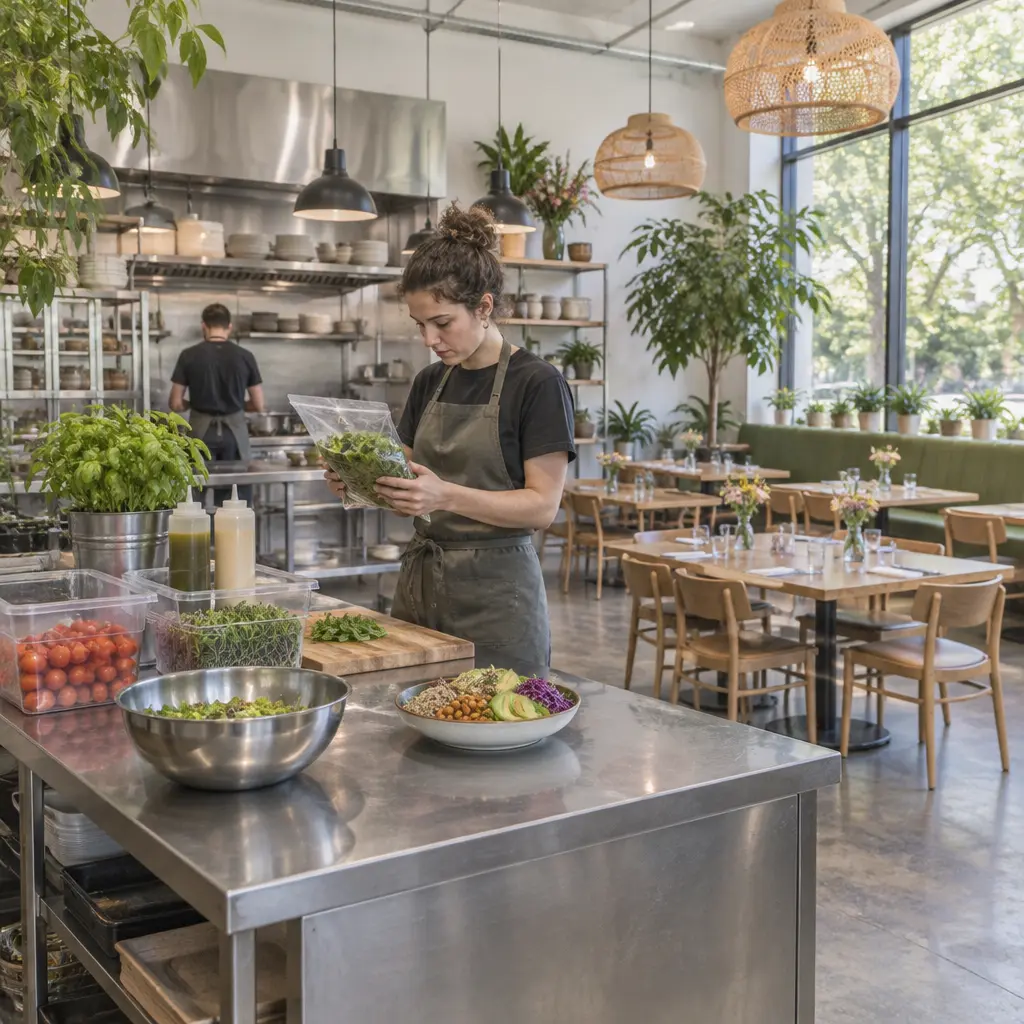
Vegan restaurants can often accommodate halal or kosher diners because meals made entirely from plant ingredients contain no meat, dairy, or eggs—but vegan food is not automatically halal or kosher. Those standards also concern ingredients, alcohol, processing, equipment, and food preparation. A restaurant’s ability to meet them therefore depends on the diner’s requirements and the restaurant’s sourcing and kitchen practices. The distinctions matter as plant-based eating grows: the Good Food Institute reported that U.S. retail sales of plant-based foods reached $8.1 billion in 2023. The sections below explain where vegan dining aligns with halal and kosher rules, where it may not, and what to ask before ordering.
Vegan Restaurant Accommodation Depends on Halal and Kosher Standards
A vegan restaurant is an establishment that serves food made without animal-derived ingredients, a definition consistent with the Vegan Society’s description of veganism. Halal means permissible under Islamic law; kosher means compliant with Jewish dietary law. Vegan menus remove many animal-related concerns, but they do not establish that a meal meets either religious standard. The Islamic Food and Nutrition Council of America (IFANCA) and the Orthodox Union (OU), among other certification organizations, assess matters beyond whether food contains meat.
The overlap is strongest for straightforward dishes made from recognizable plant ingredients. The remaining questions concern additives, alcohol, certification, cross-contact, and the diner’s own level of observance. These distinctions make it useful to separate ingredient suitability from kitchen handling and formal certification.
Vegan Ingredients and Halal Suitability
A vegan dish contains no meat, so it avoids questions about whether an animal was slaughtered according to halal requirements. Yet a plant-based label alone does not verify halal status. IFANCA notes that halal assessment can include ingredients, processing aids, and manufacturing practices. Diners may need to check flavorings, emulsifiers, enzymes, gelatin substitutes, and other processed ingredients whose source or production method may be unclear.
Alcohol is another point to clarify. Some sauces, extracts, and fermented products may contain alcohol or be produced using it. Interpretations and certification decisions can vary, so diners who avoid alcohol should ask about the specific product and follow guidance from a trusted religious authority or certifier. A restaurant’s willingness to identify packaged ingredients can make this assessment more reliable.
Vegan Ingredients and Kosher Suitability
A vegan dish contains neither meat nor dairy, which can simplify kosher meal selection, but it is not automatically kosher. The OU explains that kosher certification concerns ingredient sources, processing, and equipment as well as the finished food. A packaged sauce, cooking oil, wine, or flavoring may require kosher certification, and shared equipment can matter to observant diners.
Kosher rules also distinguish between foods and preparation contexts. For example, wine and grape products can require specific kosher oversight. Diners who keep kosher may therefore need a recognized certification symbol on packaged ingredients or assurance from a rabbi or reliable kosher authority, rather than relying on a menu’s vegan designation.
Restaurant Practices Determine Whether Accommodation Is Reliable
Once the ingredients appear suitable, the next issue is how the restaurant stores, prepares, and serves them. Cross-contact—the unintended transfer of ingredients or residues through utensils, surfaces, fryers, or storage—can affect diners who require strict separation. Halal and kosher requirements are not identical, and the exact controls needed depend on the diner’s observance and the relevant religious authority.
Shared Kitchens, Utensils, and Fryers
A shared kitchen uses some of the same equipment or work areas for different dishes. A vegan restaurant may still prepare non-vegan items, use shared fryers, or handle ingredients that concern a particular diner. For kosher diners, equipment and preparation status can be especially significant; for halal diners, avoiding prohibited ingredients and contamination may also be essential. Ask whether the restaurant can use clean, separate utensils and surfaces, and whether the fryer oil and cooking equipment are shared.
Food-safety guidance provides useful general context, though it is not a substitute for religious rules. The U.S. Food and Drug Administration’s Food Code addresses preventing contamination and maintaining hygienic food handling. Religious dietary accommodation may require additional measures beyond ordinary food-safety practice, so diners should ask specifically about the controls relevant to them.
Certification, Ingredient Records, and Staff Knowledge
Certification is a documented review by a recognized halal or kosher organization; it offers a clearer basis for trust than an unsupported menu claim. Some vegan restaurants may hold certification, while others can provide ingredient labels or supplier information without being certified. Staff knowledge matters too: an employee should be able to distinguish “vegan” from “halal” or “kosher” and explain what the kitchen can verify.
The certification question is particularly important for packaged and highly processed foods. The Food and Agriculture Organization of the United Nations describes food labeling as a means of communicating information about a product, but labels do not necessarily answer every religious question. When certification is important, look for a symbol recognized by the diner’s community and confirm that it applies to the specific product or meal.
Practical Ways to Assess a Vegan Restaurant
A brief, specific conversation before ordering can establish whether a restaurant can meet a diner’s needs. Rather than asking only whether a dish is “safe,” describe the relevant requirement: ingredient restrictions, alcohol avoidance, certification, or separate preparation. Because standards differ, a restaurant may be able to accommodate one person’s practice but not another’s.
Questions to Ask Before Ordering
- Are all ingredients and sauces plant-based, and can staff check the product labels or supplier information?
- Do any ingredients, flavorings, extracts, or cooking processes involve alcohol?
- Is the meal or any packaged ingredient halal- or kosher-certified, and which organization provides the certification?
- Are cooking surfaces, utensils, storage areas, or fryers shared with foods or ingredients I need to avoid?
- Can the kitchen prepare the meal with clean equipment and separate ingredients?
Clear answers help distinguish a verified accommodation from a best-effort request. If staff cannot confirm an ingredient or process that is essential to the diner, choosing a certified restaurant or contacting a trusted religious authority may be the more appropriate option.
A Simple Accommodation Comparison
The comparison below summarizes common considerations; it is not a religious ruling, and individual requirements can differ.
- Vegan menu: Avoids animal-derived ingredients, but does not by itself verify halal or kosher compliance.
- Halal-conscious meal: Requires attention to permissible ingredients and relevant processing or preparation concerns; certification may be important to the diner.
- Kosher-conscious meal: Requires attention to kosher-certified ingredients and preparation conditions; equipment and oversight may matter.
- Certified meal: Provides assurance under a particular certifier’s standards, subject to the scope of that certification and the diner’s own practice.
Conclusion: Vegan Dining Can Help, but Verification Matters
Vegan restaurants can be convenient for halal and kosher diners because plant-based menus avoid meat and dairy, but vegan status alone does not establish religious compliance. Ingredients, alcohol, processing, equipment, cross-contact, and certification can all affect whether a meal is acceptable. Ask precise questions, request ingredient or certification information, and consult a trusted religious authority when requirements are uncertain. Restaurants can improve access by documenting ingredients, training staff, and explaining preparation practices; diners can make more confident choices by verifying the details that matter to them.
Sources: The Vegan Society, Definition of Veganism, https://www.vegansociety.com/go-vegan/definition-veganism; Good Food Institute, U.S. Retail Market Insights for the Plant-Based Industry, 2023, https://gfi.org/marketresearch/; Islamic Food and Nutrition Council of America, Halal Certification, https://ifanca.org/halal-certification/; Orthodox Union, What Is Kosher?, https://oukosher.org/what-is-kosher/; U.S. Food and Drug Administration, 2022 Food Code, https://www.fda.gov/food/fda-food-code/food-code-2022; Food and Agriculture Organization of the United Nations, Food Labelling, https://www.fao.org/food-labelling/en/