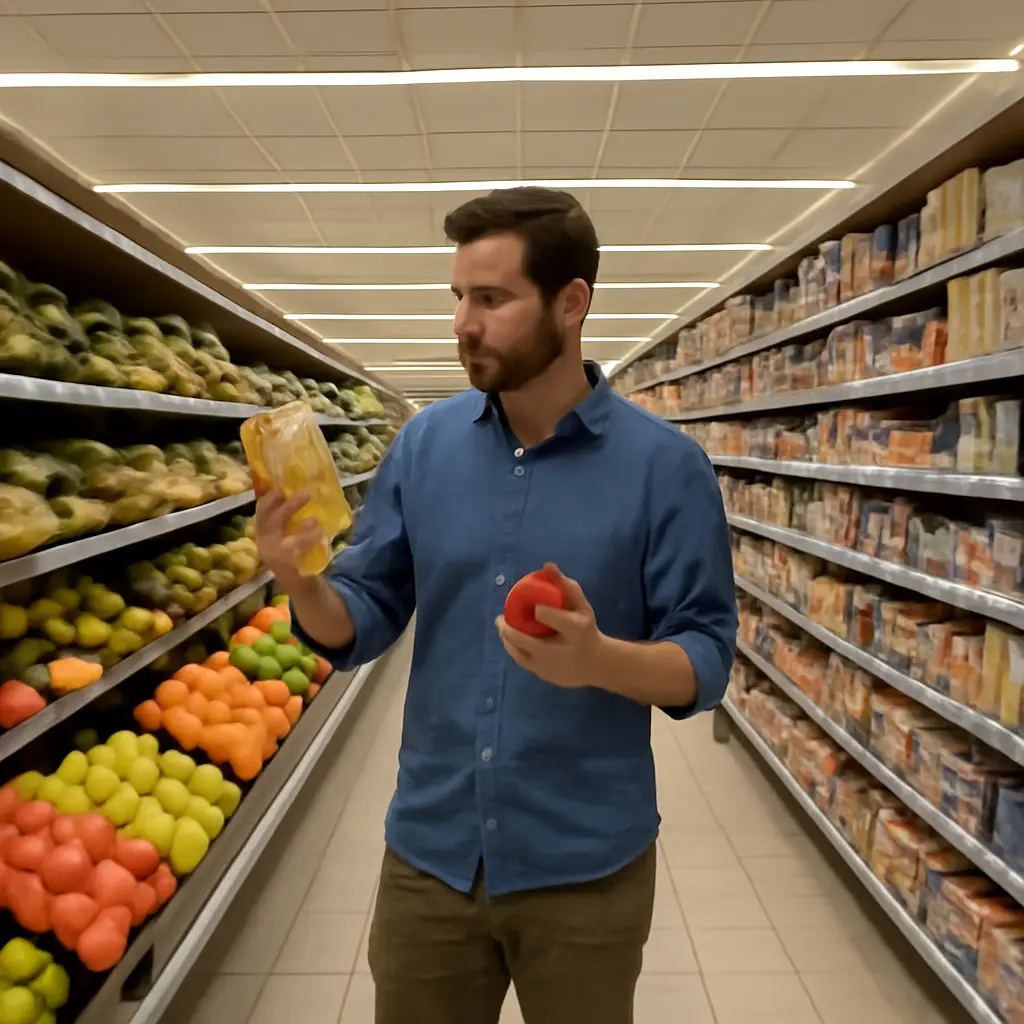
Food quality includes the freshness, taste, safety, nutritional value, and production methods behind what people eat. Consumers are spending more on some quality signals, particularly organic and premium products, but the trend is not universal: food inflation, household budgets, and differing definitions of “quality” complicate the picture. U.S. Department of Agriculture data show that certified-organic food sales reached $69.7 billion in 2023, while federal consumer-price data show that food prices have also risen substantially in recent years. Together, these figures help explain why quality is increasingly important—and why willingness and ability to pay for it vary.
Food quality spending: what the trend measures
Food quality spending is the amount consumers pay for attributes they perceive as improving a food’s safety, nutrition, flavor, freshness, origin, or production standards. It is not a single official economic measure. Researchers and businesses often use proxy measures such as organic sales, premium-product purchases, willingness-to-pay surveys, and the price difference between conventional and specialty products.
The distinction matters: a higher grocery bill does not necessarily mean consumers are choosing better-quality food. It may reflect inflation, larger quantities, or a shift toward expensive products. The strongest evidence therefore combines sales data with price indexes and consumer research rather than treating spending growth alone as proof of a universal quality upgrade.
Organic food as a measurable quality signal
Organic food is produced under standards that restrict most synthetic pesticides and fertilizers and prohibit genetic engineering, with certification and inspection requirements for covered operations. Organic certification is a production-method claim; it does not automatically mean a food is more nutritious, safer, or better tasting than its conventional equivalent.
The USDA National Organic Program reported that U.S. certified-organic product sales totaled $69.7 billion in 2023, up from $67.6 billion in 2022. The figures indicate a large and growing market, although they cover many product categories and do not show that every household is spending more on organic groceries.
Premium, fresh, and specialty products
Premium food is a broad retail category that can include specialty cheeses, high-grade meat, fresh prepared meals, locally marketed produce, and products with distinctive ingredients or provenance. Unlike organic certification, “premium” is not a single regulated standard, so its meaning depends on the product and the claims made by its seller.
Consumers may pay extra for freshness, flavor, convenience, or a trusted origin, but premium pricing is not proof of superior nutrition. For meaningful comparisons, shoppers can check ingredient and nutrition labels, food-safety information, production claims, and unit prices rather than relying on packaging language alone.
Food quality spending reflects multiple consumer priorities
People do not define quality in exactly the same way. For one shopper, it may mean fewer additives; for another, reliable safety, richer flavor, or responsible sourcing. These priorities overlap, but they can also conflict with price and convenience. Food choices are therefore shaped by a combination of personal values, product information, household income, and access to stores.
Nutrition and ingredient preferences
Nutritional quality refers to the contribution a food makes to a balanced diet, including its nutrients, energy content, and role in an overall eating pattern. Consumers may pay more for products marketed as high in protein, whole-grain, low in added sugar, or made with simpler ingredient lists. Such claims should be assessed against the Nutrition Facts label: a “natural” or “clean label” description does not have a single comprehensive federal definition that guarantees a particular health benefit.
The Centers for Disease Control and Prevention reports that fewer than one in ten U.S. adults meet federal recommendations for fruit and vegetable intake. This underscores a key distinction: paying a premium for selected products does not necessarily mean a person’s overall diet has become more nutritious. Affordability, availability, and consistent eating patterns also matter.
Food safety and traceability
Food safety is a foundational quality attribute: food should be handled and produced in ways that reduce contamination and illness risks. Traceability—the ability to follow a product through relevant stages of its supply chain—can help businesses and regulators identify affected products during an investigation or recall. It is valuable for managing risk, though traceability itself does not guarantee that food is free from hazards.
The U.S. Centers for Disease Control and Prevention estimates that foodborne illness causes about 48 million illnesses, 128,000 hospitalizations, and 3,000 deaths in the United States each year. Those estimates help explain why consumers and food companies treat safety as a core component of quality, even when it is not visible from a product’s appearance or price.
Origin, animal welfare, and environmental claims
Origin and production claims are another category of quality signals. “Local,” “grass-fed,” “cage-free,” and sustainability labels may communicate information about where or how a product was made, but definitions and verification differ by claim. A label can indicate a specific practice without establishing that the product is healthier or more sustainable in every respect.
For example, USDA organic certification provides a defined regulatory framework, while other claims may be governed by separate rules or voluntary certification programs. Shoppers seeking these attributes can look for the certifying organization, read the exact wording, and distinguish audited standards from general marketing language.
Food inflation complicates the spending story
The amount households spend on food reflects both choices and prices. The U.S. Bureau of Labor Statistics Consumer Price Index shows that food-at-home prices rose sharply during the 2021–2022 inflation period. As a result, a larger grocery bill may represent higher prices rather than a deliberate move toward premium or higher-quality products.
USDA Economic Research Service data also show that food spending takes a larger share of disposable income for lower-income households. This means the ability to trade up to organic, specialty, or premium products is uneven. Some consumers can pay for preferred attributes, while others may prioritize calories, familiar staples, and value.
Reading sales and survey figures carefully
Market growth, survey responses, and household expenditures measure different things. Sales totals can rise because of inflation, population growth, or broader product availability. Survey respondents may say they value quality but still choose lower-priced products at checkout. Household expenditure data capture actual spending more directly, but do not by themselves reveal why a purchase was made.
A useful way to present the evidence is a chart comparing three indicators over time: certified-organic sales, the food-at-home Consumer Price Index, and household food expenditures. Such a chart should identify whether values are nominal or inflation-adjusted and should avoid implying that the indicators measure the same behavior.
How consumers can evaluate quality for value
A higher price is not a dependable substitute for evidence. Consumers can make more informed choices by identifying the attribute they value, checking whether a claim has a clear standard, and comparing unit prices and nutrition information. For food safety, follow storage and preparation guidance; for certification claims, verify the program and its requirements.
- Compare unit prices to see whether a premium reflects a meaningful difference in quantity or product attributes.
- Use the Nutrition Facts label and ingredient list to assess nutrition-related claims.
- Look for recognized certification or clearly defined production standards when buying for a specific farming or sourcing attribute.
- Consider frozen, canned, and seasonal foods as potentially lower-cost ways to meet dietary needs; quality is not limited to fresh or premium products.
Conclusion: quality matters, but spending is not universal
Food quality spending is best understood as a set of choices about nutrition, safety, freshness, taste, and production practices—not as one simple upward trend. Organic sales provide evidence of substantial demand for a defined production standard, while food-price data show why rising grocery costs cannot automatically be interpreted as consumers buying better food. Income, access, and household priorities shape who can pay extra and which attributes they choose.
Consumers, retailers, and policymakers can make the discussion more useful by distinguishing verified standards from broad marketing language and by tracking inflation-adjusted spending alongside sales and access measures. For further reading, consult USDA organic-market and food-price resources, Bureau of Labor Statistics inflation data, and CDC guidance on nutrition and food safety.
Sources: U.S. Department of Agriculture Agricultural Marketing Service, Organic Market Development, https://www.ams.usda.gov/services/organic-market-development; U.S. Department of Agriculture Economic Research Service, Food Price Outlook, https://www.ers.usda.gov/data-products/food-price-outlook/; U.S. Bureau of Labor Statistics, Consumer Price Index, https://www.bls.gov/cpi/; Centers for Disease Control and Prevention, Fruit and Vegetable Consumption, https://www.cdc.gov/nutrition/php/data-research/fruit-vegetable-consumption.html; Centers for Disease Control and Prevention, Estimates of Foodborne Illness in the United States, https://www.cdc.gov/foodborneburden/2011-foodborne-estimates.html; U.S. Department of Agriculture Food Safety and Inspection Service, Food Traceability, https://www.fsis.usda.gov/food-safety/food-safety-modernization-act/fsma-final-rules/food-traceability